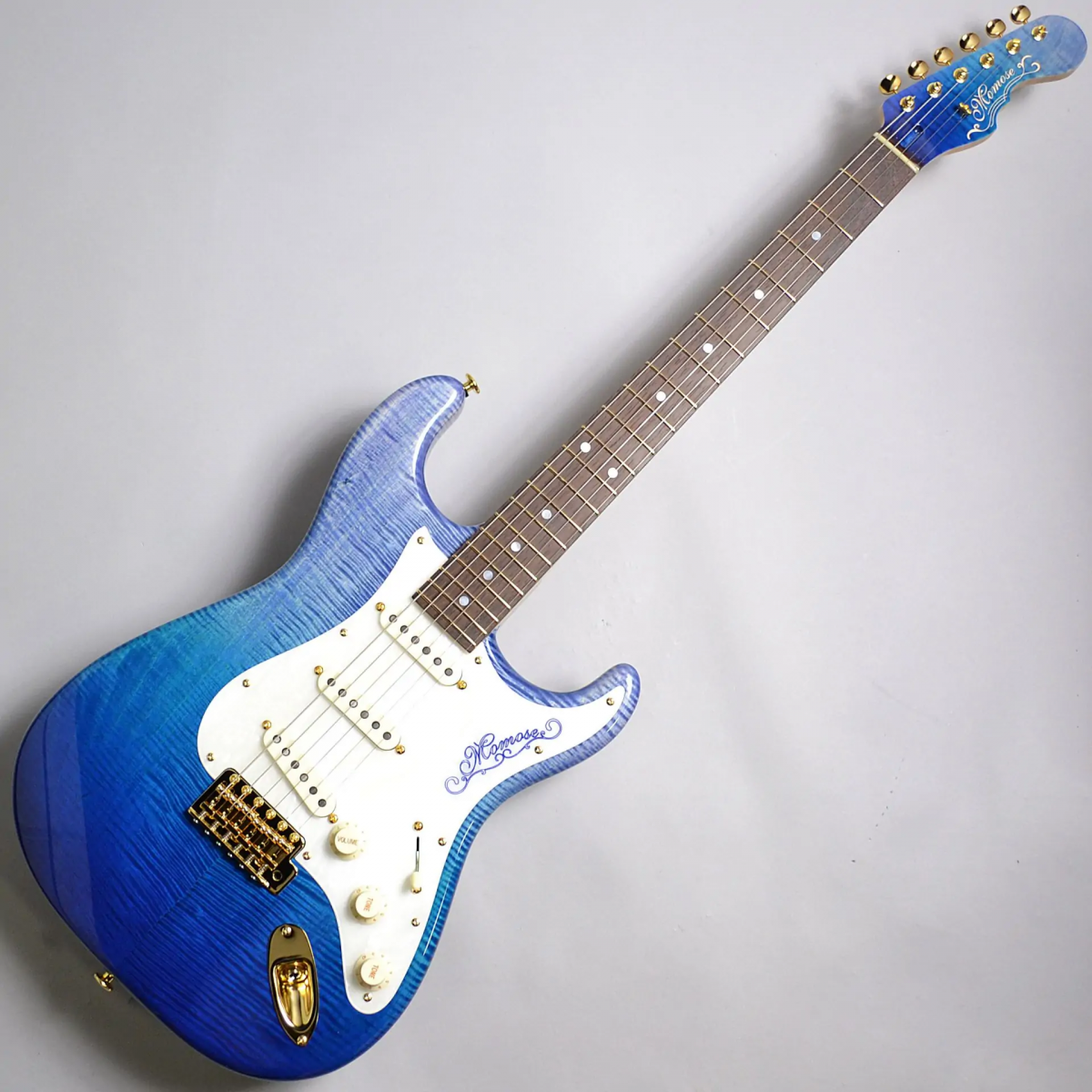
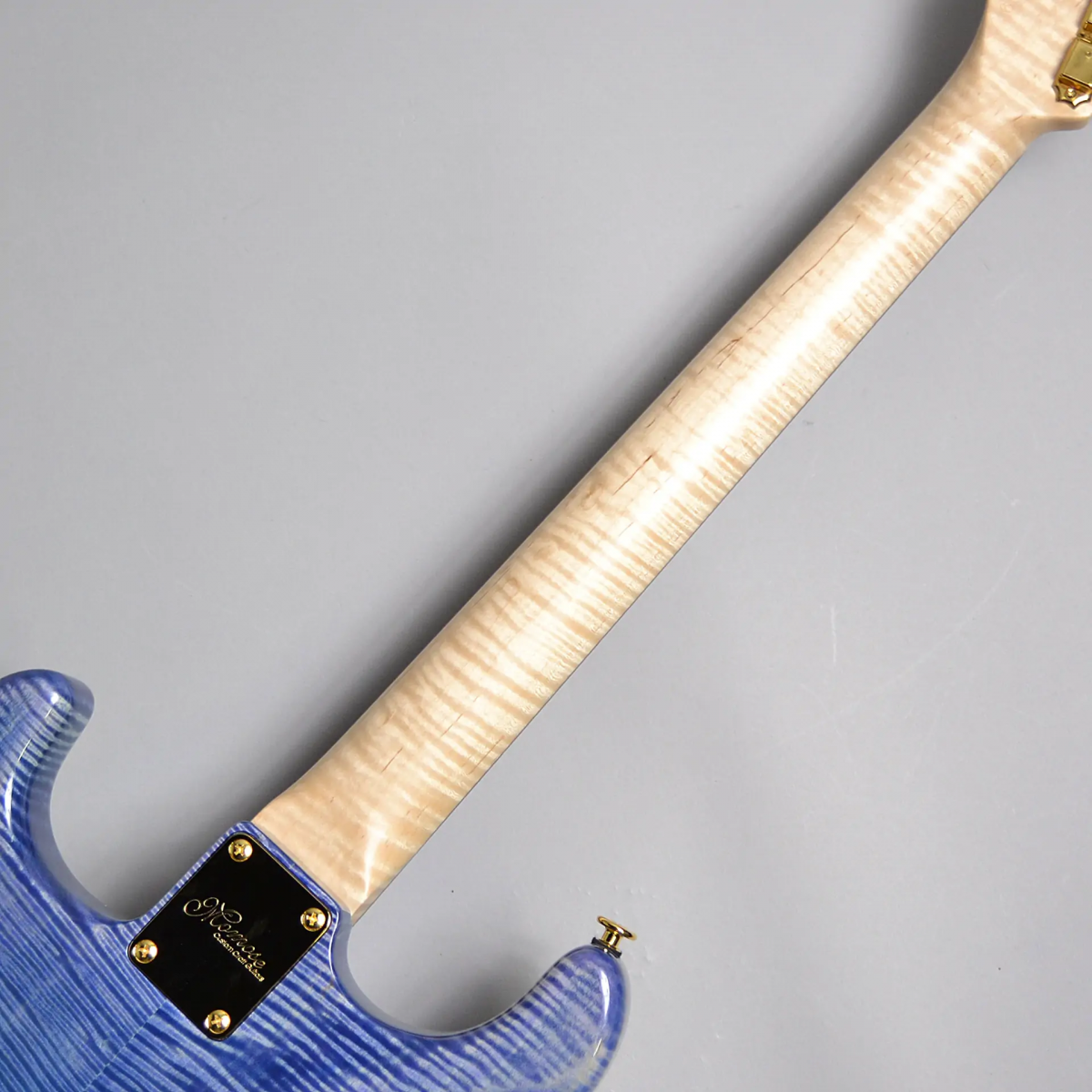
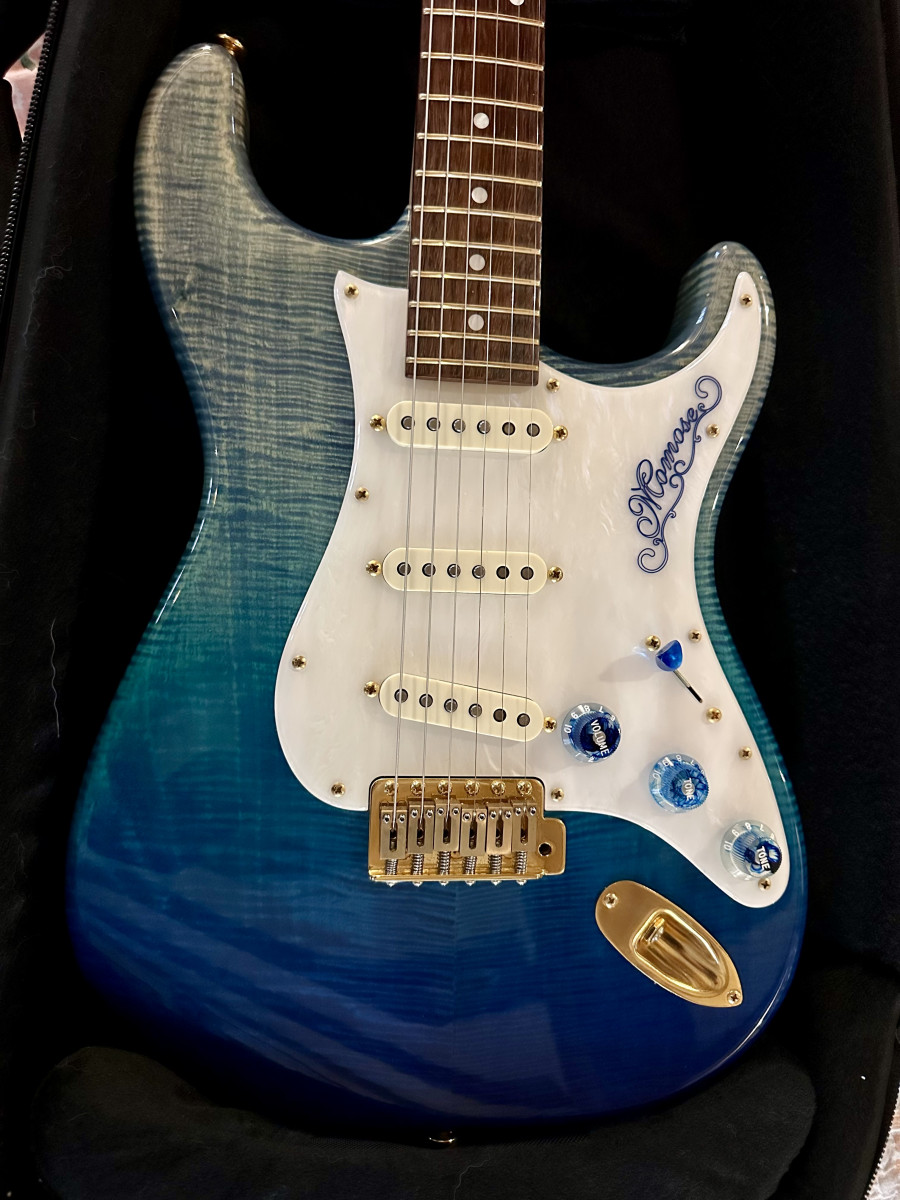
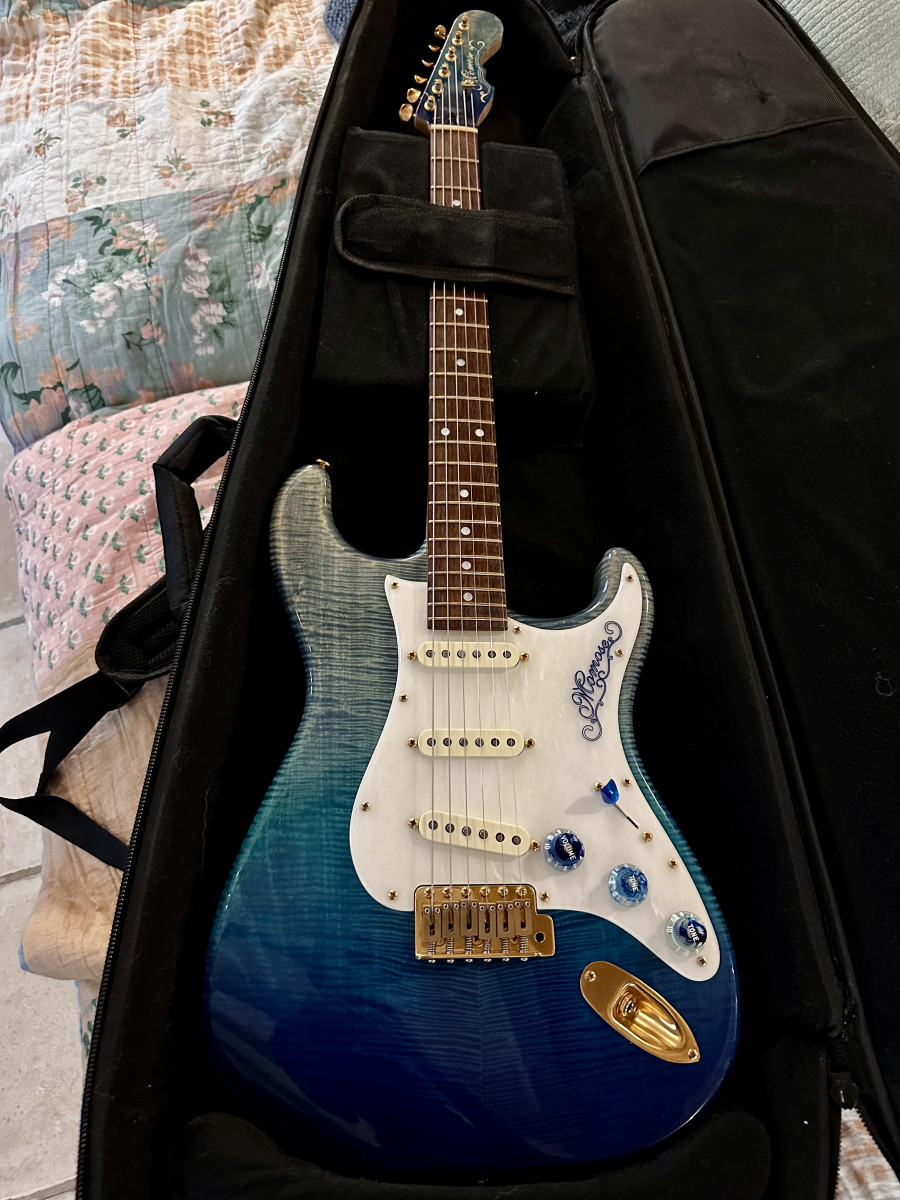
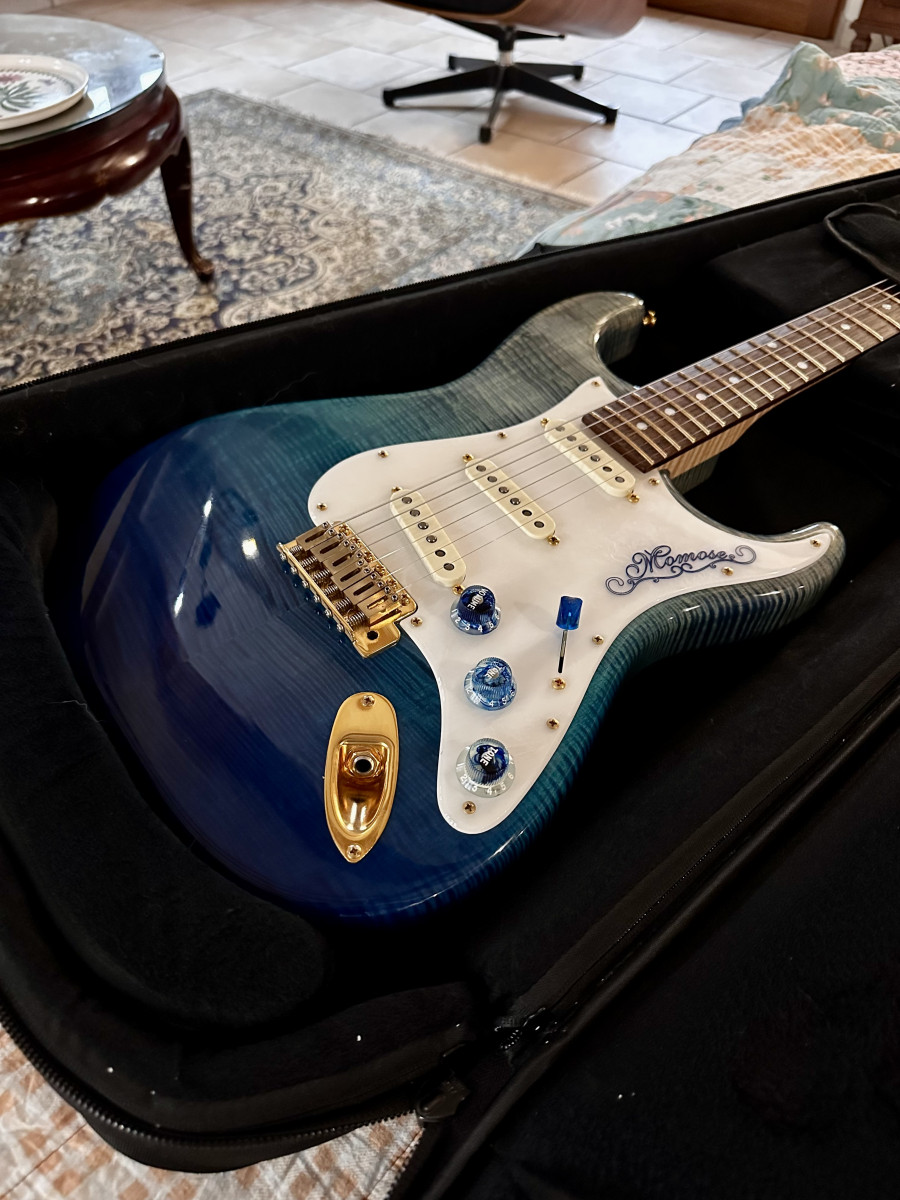
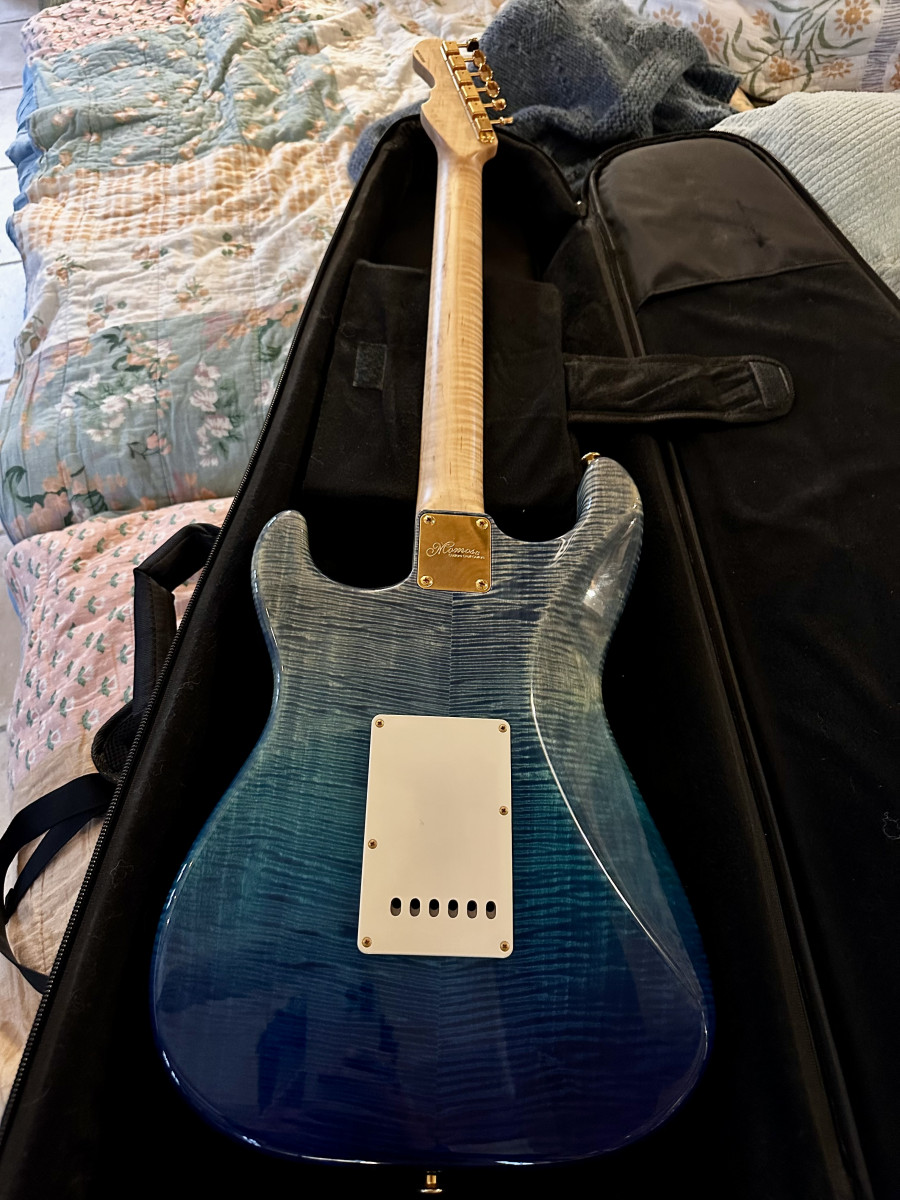
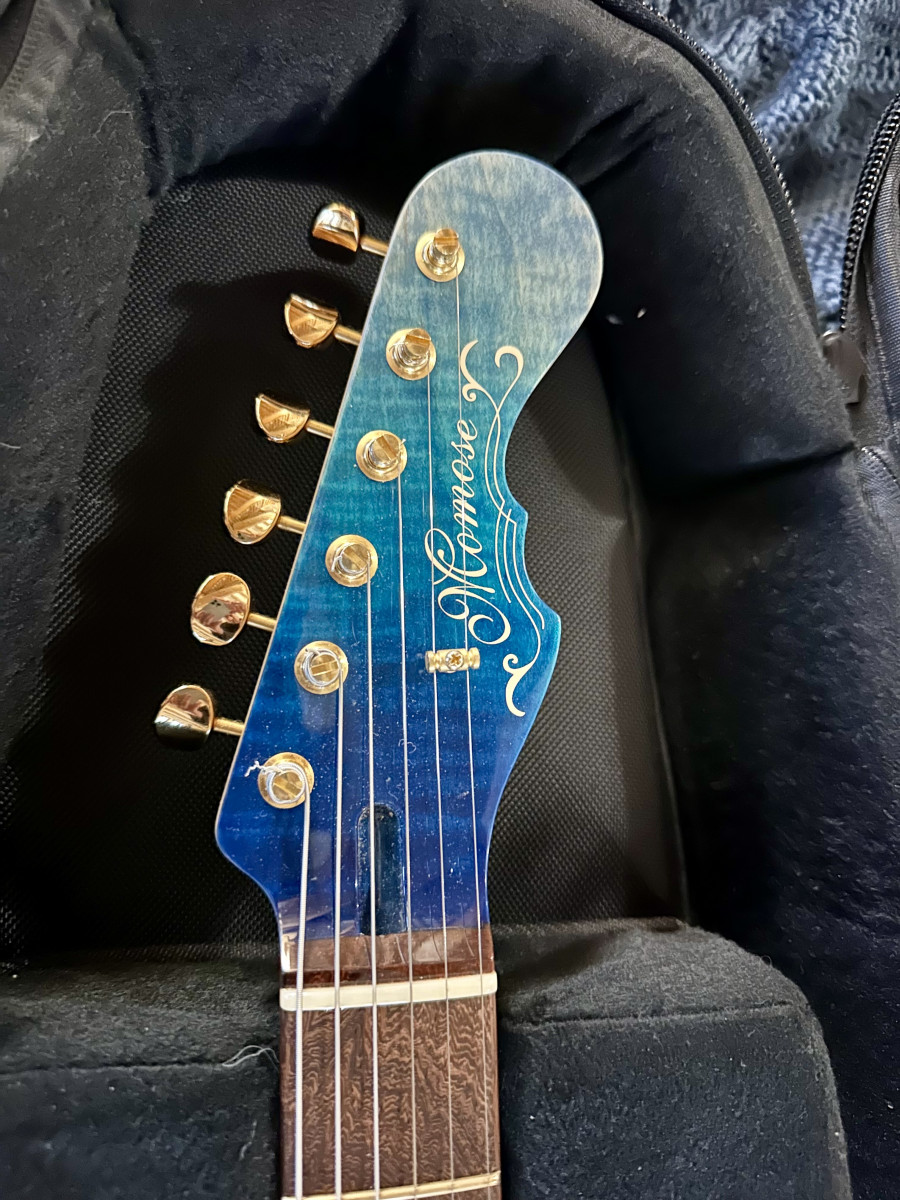
Je suis l'heureux propriétaire d'une Momose MC-FT/NJ-SP'19 directement importée du japon via Buyee. Reçue dans un état neuf, les japonais méritent bien leur réputation de perfectionniste vis à vis de leurs affaires.
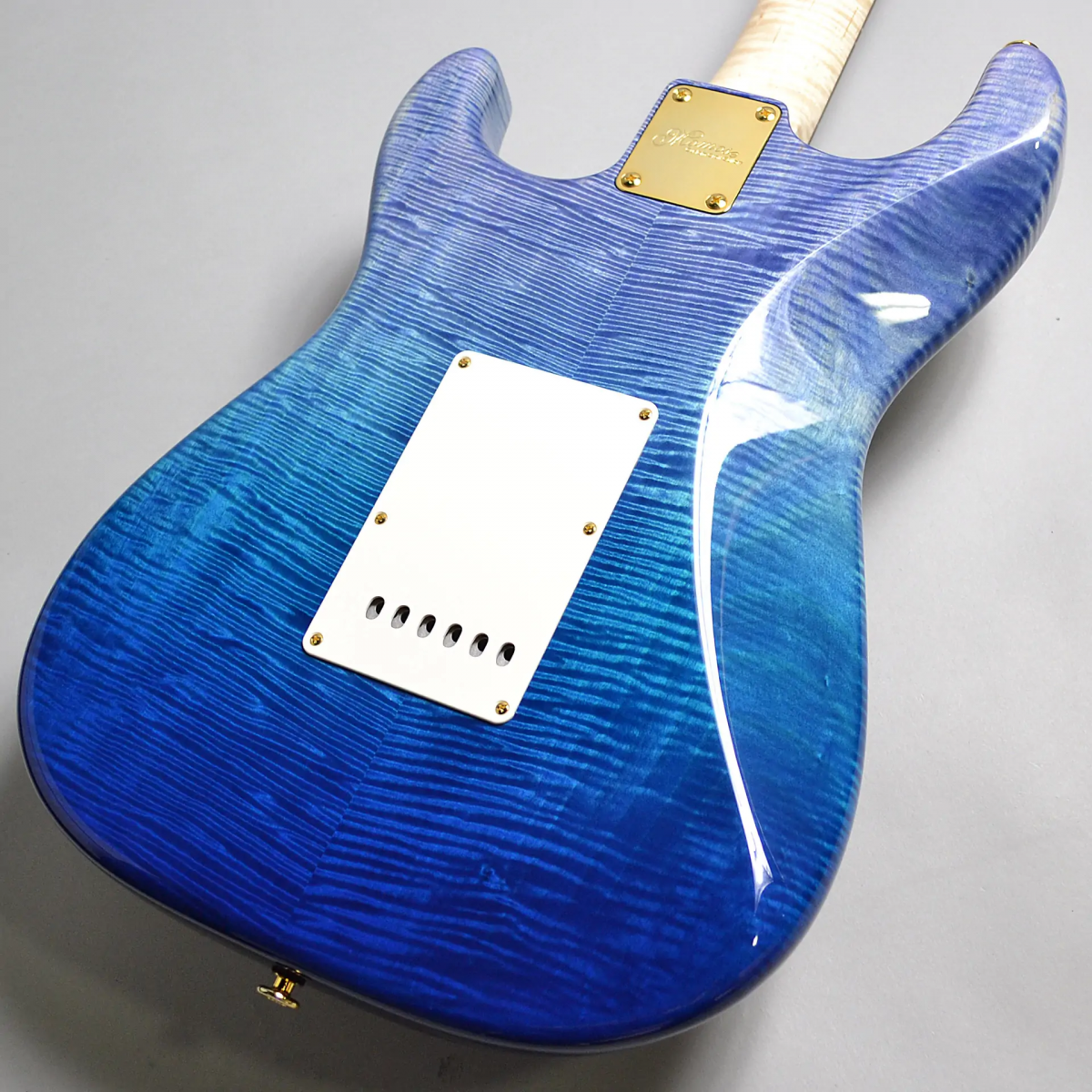
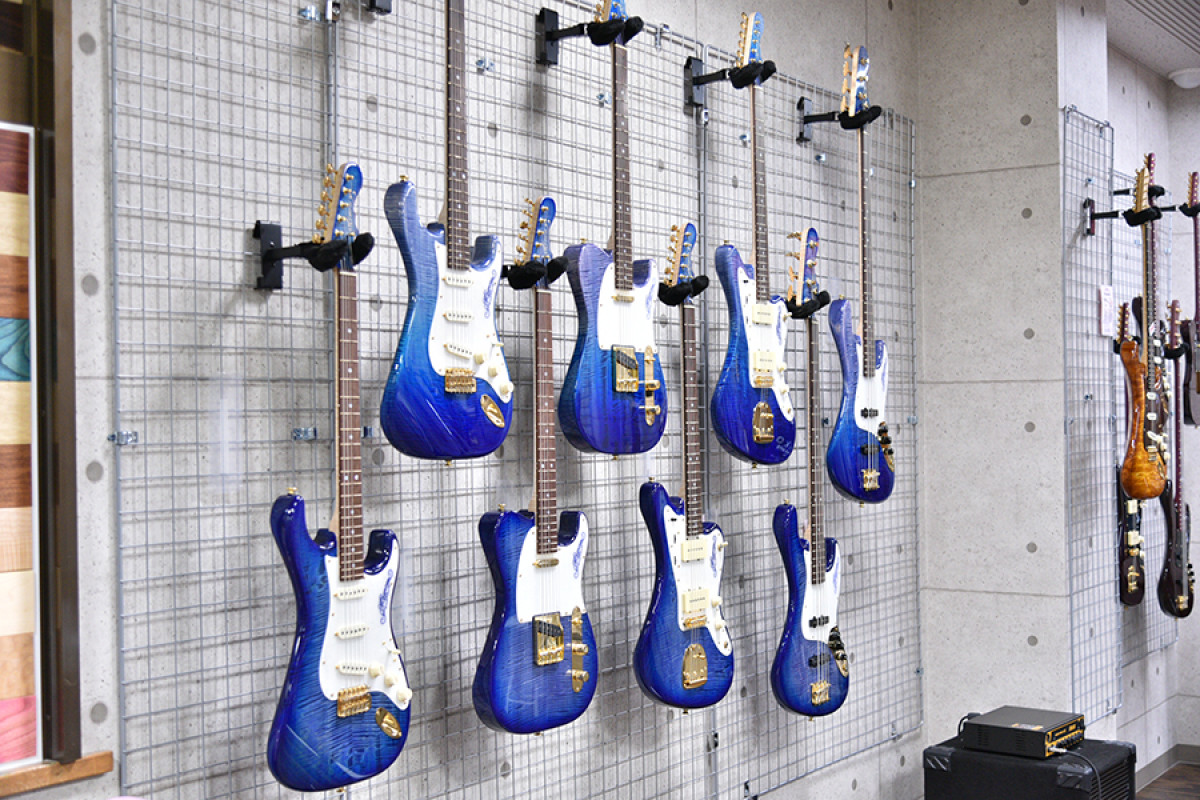
Elle a été produite en 3 exemplaire pour le Diviser Special Trade Show de 2029. Elle est en deux pièces de Flame Tochi dans un dégradé de couleur bleu, et une touche en palissandre de Madagascar. Elle est équipée de micros Mojotone 59, frettes Jescar et hardware Gotoh.
Elle sonne du tonnerre, j'en suis tombé amoureux.
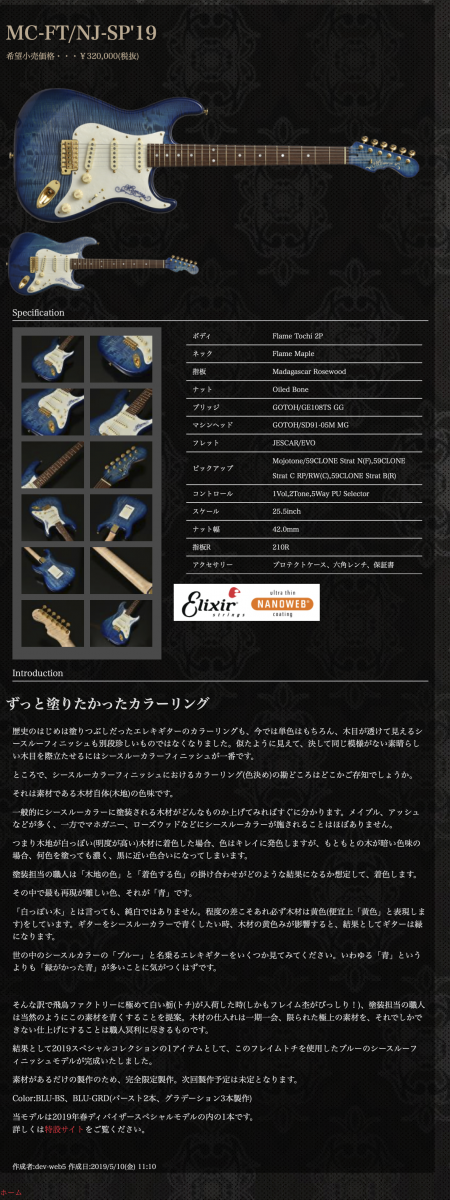
Une photo de la fiche officielle sur leur site, retrouvée via les archives du net :
Citation:
Catalog Specifications
• Body: Flame Tochi (Beech), 2-Piece
• Neck: Flame Maple
• Fingerboard: Madagascar Rosewood
• Nut: Oiled Bone
• Bridge: GOTOH GE108TS GG
• Machine Heads: GOTOH SD91-05M MG
• Frets: JESCAR EVO K
• Pickups:
• Mojotone 59CLONE Strat N (Front)
• Mojotone 59CLONE Strat C RP/RW (Center)
• Mojotone 59CLONE Strat B (Rear)
• Controls: 1 Volume, 2 Tone
• Pickup Selector: 5-Way
• Scale Length: 25.5 inches
• Nut Width: 42.0 mm
• Fingerboard Radius: 210R
• Weight: 3.375 kg
Accessories Included
• Protective Case
• Allen Wrench
• Warranty Card
A Coloring We’ve Always Wanted to Do
In the early history of electric guitars, finishes were solid, opaque colors. Today, however, not only are single-color finishes common, but see-through finishes that allow the wood grain to show are no longer unusual at all. To highlight beautiful wood grain—similar at a glance, yet never identical—there is nothing better than a see-through color finish.
By the way, do you know the key factor when deciding on a color for a see-through finish?
That key is the color of the wood itself—the raw wood.
You can understand this immediately by looking at the types of wood commonly used for see-through finishes. Maple and ash are frequently used, while mahogany and rosewood are almost never finished this way. In other words, when light-colored (high-brightness) wood is dyed, the color appears clean and vivid. But if the wood is naturally dark, no matter what color you apply, it will end up deep and close to black.
The finishing craftsman applies color while anticipating the result produced by the combination of the wood’s natural color and the applied dye.
Among all colors, the most difficult to reproduce accurately is blue.
Even so-called “light-colored wood” is not pure white. To varying degrees, all wood contains yellow tones (referred to here simply as “yellow”). When you try to make a guitar blue with a see-through finish, the yellowish tint of the wood affects the result, causing the guitar to turn green.
Take a look at several electric guitars on the market that are labeled as “blue” see-through finishes. You’ll likely notice that many are not truly blue, but rather “greenish blue.”
For this reason, when extremely white tochi (Japanese horse chestnut) wood arrived at the Asuka Factory—covered densely with flame grain—the finishing craftsman naturally proposed finishing it in blue. Opportunities to source wood are once-in-a-lifetime encounters, and turning limited, top-grade material into a finish that can only be achieved with that wood is one of the greatest rewards of craftsmanship.
As a result, a blue see-through finish model using this flame tochi was completed as one item in the 2019 Special Collection.
Because production depends entirely on the availability of the material, this is a strictly limited run, and there are no plans for a future release.
Colors:
BLU-BS, BLU-GRD
(2 burst models and 3 gradient models produced)
This model is one of the 2019 Spring Deviser Special Models.